Services
Primega Construction principally provides the following services in Hong Kong:
- soil and rock transportation services
- biodiesel oil trading, and
- construction works, which mainly includes ELS works and bored piling
We generally provide our services as a subcontractor to other construction contractors in Hong Kong.
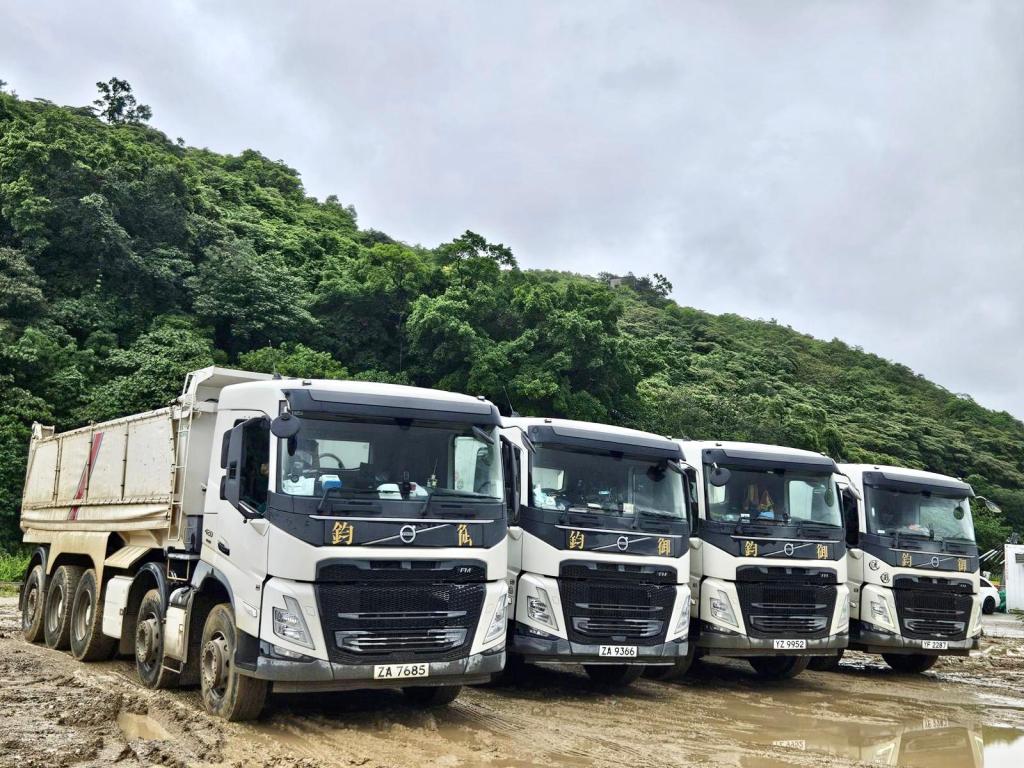
- Soil And Rock Transportation Services
Construction activities, which include, among others, site clearance, excavation, construction, refurbishment, renovation, demolition and road works generate a large amount of C&D materials, a large portion of which ultimately becomes construction waste. Construction contractors are obligated to sort and dispose of construction waste at government waste disposal facilities, which charge a disposal fee with respect to the weight and type of construction waste. The producers of construction waste are required to open a billing account with the EPD prior to using a government waste disposal facility and to pay the relevant construction waste disposal charge. Primega Construction’s soil and rock transportation services are mainly provided to construction contractors to take care of excavated materials, primarily soil and rock, generated during the excavation stage of a foundation construction project. Primega Construction’s customers primarily consist of subcontractors operating in private sector construction projects.
Primega Construction’s services involve the handling, loading and transport of excavated materials, substantially comprised of soil and rock, for disposal at relevant government waste disposal facilities such as landfills, sorting facilities or public fill reception facilities, as the case may be.
Among the C&D materials generated from construction activities, only a subset of inert materials such as soil, rock and concrete are suitable for reuse and/or recycling into products with marketable value. These materials are suitable for reuse in construction projects such as reclamation, or site formation works with or without further processing. Other inert C&D materials such as asphalt, tiles, bricks and glass cannot be feasibly processed and recycled into marketable products. The excavated materials Primega Construction handles are a mix of such materials. Rather than disposing of all the C&D materials at government waste disposal facilities, Primega Construction makes efforts to reduce waste by reintroducing suitable materials back into the market as reusable or recyclable materials.
Primega Construction identifies reclamation and site formation construction contractors and other vendors interested in purchasing the excavated materials. Excavated soil can be used for land filling works while rock materials can be treated and processed into viable construction materials such as recycled aggregates for mixing concrete.
These excavated materials that can be repurposed or sold will not be subject to disposal charges at government waste disposal facilities, reduces the amount of environmental waste, and at the same time, the operational costs of our operating subsidiary.
- Biodiesel oil trading
Primega Construction operates as a biodiesel oil provider in the supply chain, obtaining biodiesel oil from wholesale oil trading companies, for sale and delivery to its customers at the construction site. The customers of our operating subsidiary are mainly construction contractors which utilize biodiesel oil to operate construction machinery. Primega Construction places orders with the oil trading companies for inventory for trading and for use by its own machinery. Primega Construction owns a diesel tank wagon with a storage capacity of 15,000 liters. Primega Construction maintains a limited amount of inventory of up to 15,000 liters, which is stored in the diesel tank wagon. It will then make enquiries with construction contractors to confirm orders and arrange for direct delivery to the construction sites of its customers. The pricing is set based on cost plus markup, which is determined by reference to two principal factors, namely (i) the wholesale cost of procuring the biodiesel oil and (ii) the delivery location of the customer. In addition, Primega Construction also has a secondary diesel tank wagon with a storage capacity of 11,500 liters as a contingency backup. During the years ended March 31, 2023 and 2022 and the six months ended September 30, 2023, Primega Construction did not experience any significant difficulty sourcing biodiesel oil.
- Construction works
Primega Construction provides ELS works as subcontractor, which are typically used for establishing a supported area for deep excavation in order to facilitate construction of footing foundation basement or pile caps for further infrastructure development. ELS works typically begin by inserting steel pile wall into the soil for the planned excavation, followed by excavation within the steel pile walls. Lateral support is then added to keep the steel pile stable for deeper excavation.
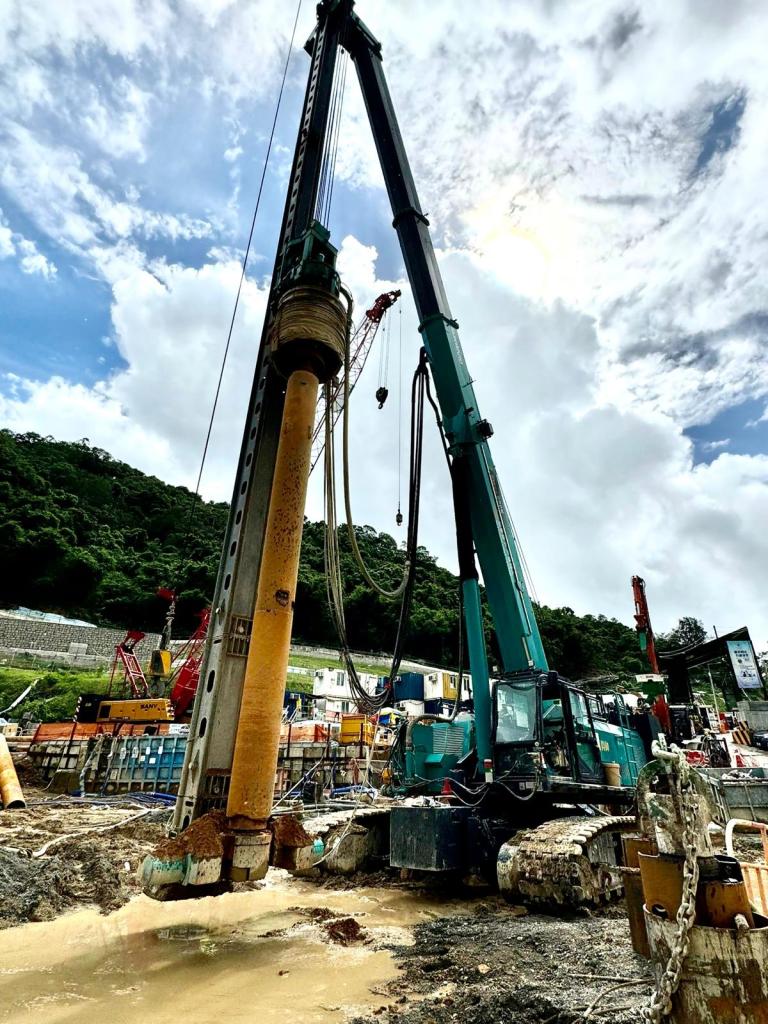
Primega Construction also acts as subcontractor for piling works. Piling involves any work in connection with forming a pile in the ground by a variety of means for the purposes of foundation construction. During the years ended March 31, 2022 and 2023 and the six months ended September 30, 2023, Primega Construction has undertaken projects for construction of bored piles. Bored piles are a type of reinforced concrete pile expected to be used to bear heavy loads, and a common type of foundation used in Hong Kong. Bored piling requires the use of different kinds of machinery, such as excavators, air compressors, crawler cranes, oscillators, etc., and Primega Construction possesses most of the standard machinery and equipment necessary for construction of bored piles.
Our operation flow chart
Set out below is the flow chart summarizing the usual workflow of a soil and rock transportation project:

Quotation and contract execution
As standard practice, Primega Construction is invited by its customers to provide a quotation for a potential project. The customers will typically include in its invitation a preliminary report on the composition of the materials to be excavated at the construction site. Primega Construction will review the preliminary report and conduct an on-site ground investigation to determine the physical characteristics of the site. After the investigation, Primega Construction will conduct a preliminary review and assessment of the potential project. Primega Construction would consider (i) the aggregate estimated volume of materials involved and the project timeframe, (ii) distance between the site location and the relevant reception site, (iii) capacity and resource availability, and (iv) previous experience and relationship with the customer. Once Primega Construction’s management considers the above factors and estimates the expected profitability of a potential project, they will provide a quotation to the customer.
Upon receipt of the quotation, the customer may by way of interview or enquiries clarify with Primega Construction the particulars of its submitted quote. Once the customer decides to engage Primega Construction, generally, it will be formally informed of the customer’s acceptance. Primega Construction may then enter into a formal engagement agreement with the customer.
Project planning
Upon formal engagement, the management of Primega Construction will allocate the required personnel to the project and assesses the necessary machinery and equipment on-hand. Primega Construction will estimate the volume required to be transported per day, and allocate the necessary personnel and machinery to ensure completion of the project on time.
If Primega Construction’s resources are insufficient to meet the project timetable, it will make arrangements to engage subcontractors to supply additional transport vehicles to ensure sufficient loading capacity for the project.
At this stage, Primega Construction will make enquiries with other construction contractors in need of fill materials. These contractors are typically engaged in foundation projects or reclamation projects and require soil for use as filling materials.
Project execution
Forming a project team
The project team of Primega Construction is generally comprised of a project manager, a site foreman, on-site machinery operators, coordinators and truck drivers. The project manager will closely monitor the progress of the project on a continuing basis, and oversee the project on site, reporting to senior management the project status and identifying any problems that need to be resolved from time-to-time.
Transportation to relevant reception sites, recycling and treatment and disposal of construction waste
The initial stages of the projects typically involve sorting the initial layer of materials from excavation. This generally includes a mixture of inert and non-inert C&D materials, including remnant waste from the site clearance process, that are generally not suitable for reuse. The initial layer comprises approximately 20% of the overall volume of materials handled and is considered entirely construction waste. The project team loads the construction waste onto tipper trucks for disposal at the nearest landfill or sorting facility depending on the composition of inert to non-inert construction waste. When the tipper truck carrying the construction waste enters the reception facility, a corresponding transaction record (“CHIT”) is presented and the truck is weighed at the in-weighbridge and inspected as to whether the wastes are permitted to be discharged at the facility. If the contents of the waste fail to comply with the acceptance criteria, a rejection advice will be issued and the truck cannot discharge its waste at the reception facility. When accepted, the truck will be directed to the designated area for unloading the construction waste material. After discharging the waste, the truck will then be weighed again to estimate the weight of waste material discharged. Based on the recorded weight recorded on the CHIT, a waste disposal charge at a rate of HK$175 (approximately US$22.34) up to HK$200 (approximately US$25.53) per ton is payable for disposal of construction waste at sorting facilities and landfills, respectively.
As excavation continues, the materials excavated will consist almost entirely of soil and rock, typically in a ratio of 60% to 40%. During this stage, sorting is required to separate the soil and rock materials, which is typically carried out by the construction contractor, depending on the engagement terms. After sorting, Primega Construction will confirm with other construction contractors the amount of soil that can be reused as filling material, and these contractors will arrange for on-site collection of the materials at no cost. To ensure the soil is recycled and reused, the project team maintains communication with these contractors and will obtain a set of supporting documents to track the transit of the materials until it is redeployed. Soil that meets certain standards is typically reused as backfill in foundation and reclamation projects at other construction sites.
In March 2022, Primega Construction entered into a supply agreement to sell rock materials to a customer at a fixed rate of HK$15 (US$1.92) per ton. Subsequently in September 2022, the fixed rate was revised by mutual agreement to HK$10 (US$1.28) per ton. As part of the arrangement, Primega Construction will arrange for delivery of raw rocks to the facility designated by the customer. For the year ended March 31, 2023, Primega Construction recorded approximately HK$3.21 million of such sales, representing approximately 144,000 tons of rocks at a price point of HK$15 per ton and approximately 105,000 tons at HK$10 per ton. For the six months ended September 30, 2023, Primega Construction recorded approximately HK$800,000 of such sales, representing approximately 80,000 tons of rocks at a price point of HK$10 per ton.
Project monitoring
The project manager regularly provides progress updates to the directors. Such updates include accounts on the areas of, but are not limited to, project performance, machinery and facilities on site, delays and causes, and safety and environmental matters. In addition, we would normally hold progress meetings with our customer throughout the project duration. The key members of the project team will keep monitoring the progress of their respective work, and they are all supervised by the project manager. We adopt a stringent quality standard pursuant to which our project team is required to complete the project on time.
Progress payment
Primega Construction is generally paid monthly based on the certified value of the works completed in the preceding month, measured in volume of materials disposed.
 Primega Group Holdings Limited